
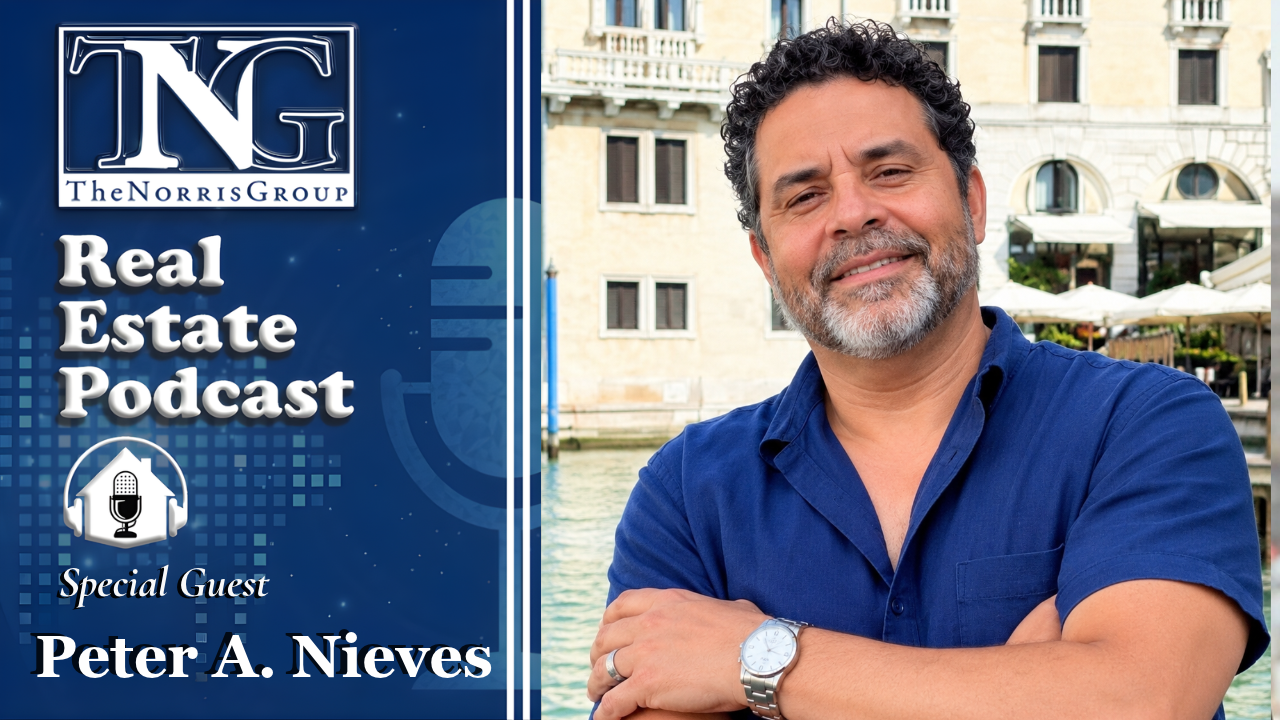
The Hidden Legal Risks of Using AI with Peter Nieves | Part 1 #972
In Part 1 of Joey Romero’s conversation with Peter A. Nieves, Owner and Founder of Nieves Intellectual Property Law Group, they explore the hidden legal risks businesses need to understand before incorporating artificial intelligence into their operations. Peter is a nationally recognized intellectual property professional with extensive experience as a Global IP Portfolio Manager, Patent and Trademark Prosecutor, Patent Litigator, Copyright and Trade Secret Attorney, and Business Advisor. His work focuses on helping businesses manage, protect, and maximize the value of their intellectual property both domestically and internationally.
During the conversation, Peter explains why businesses should be cautious about the information they share with AI platforms and whether they actually own the content these tools generate. He discusses how AI-generated software, images, and written materials can create copyright and trademark infringement concerns, while also highlighting the risks of exposing confidential business and client information. Drawing from his experience in intellectual property law and patent litigation, Peter emphasizes the importance of understanding AI platform settings, protecting ownership rights, and establishing clear agreements with third-party vendors. As AI continues to transform the way businesses operate, he shares why using these tools responsibly is essential to avoiding costly legal disputes and protecting valuable business assets.
In this episode:
The risks of AI platforms using your content to train their models.
Why businesses may not own the copyright to AI-generated content.
Copyright and trademark infringement risks when using AI-generated images, software, and written materials.
How uploading confidential client or company information to public AI platforms can create serious privacy and legal issues.
Why businesses should establish clear AI usage policies and vendor agreements.
How to use AI responsibly while protecting intellectual property and business assets.
Episode:
Narrator
Welcome to the Norris Group real estate podcast, a show committed to bringing you insights from thought leaders shaping the real estate industry. In each episode, we'll dive into conversations with industry experts and local insiders, all aimed at helping you thrive in an ever changing real estate market, continuing the legacy that Bruce Norris created, sharing valuable knowledge and empowering you on your real estate journey. Whether you're a seasoned pro or a newcomer, this is your go to source for insider tips, market trends and success strategies.
Intellectual property law group, a nationally recognized leader in the field of intellectual property, IP, whose unique practice focuses on many aspects of IP, both domestically and internationally. Peter is a global IP portfolio manager, patent and trademark prosecutor, patent navigator, adjunct professor of patent law, business advisor, copyright and trade secret attorney. And his practice includes management of IP portfolios, patent licensing, IP legal opinions, counseling on IP strategies and IP due diligence in connection with mergers and acquisitions.
He has extensive knowledge of the requirements and procedures for procurement of intellectual property and enforcement rights and complete understanding of how such intangible assets affect a corporation and strategies for best capitalizing on such assets globally. Let's welcome Peter. All right.
Welcome back to the Norris Group Real Estate Podcast. We have a returning guest. Peter Navis is back with us.
He was with us back in May. Peter, how are you doing? Hey, I'm great. Yeah, a lot of stuff's been going on.
So it's great to be here, man. Well, when we talked to you in May, we covered things like who owns AI generated work, what happens to the data that you put into these tools and what businesses need to think about before they let an AI agent go to work. Since then, Peter, you gave a keynote at Tsunami One and you returned with the Norris Group and White Feather AI.
This time at Tsunami Two, Buddy and White Feather AI expanded it and you were again a featured speaker. So now you've had two chances to speak in front of a room full of people trying to put AI to work. So what's changed from May that would surprise somebody who listened to our first interview? Well, I think one of the big issues that's kind of bothering me is that a lot of the AI platforms are automatically setting the settings so as to train their models without your knowledge.
I mean, I started out speaking in the room. It was like, what, 300 people that were in the room, standing room only at this point, because it was a really good event. And I asked everybody to do a really simple exercise.
I said, take your cell phone, open ChatGBT, and I walked them through checking to see whether or not all the stuff that they're entering into their ChatGBT on their cell phone is going to open AI. And over 80% of the room was completely freaking out. Like, you could hear them in the room, like, talking and getting upset.
And when I went through all the settings and it's, I mean, it's remarkably unfortunate that people don't realize that, you know, AI essentially is grabbing your content. And unless you specifically are doing things like purchasing an AI platform that is, let's say, at an enterprise level, and you're making certain settings are not for training the model. People are not aware of this.
So more and more, like, thousands of AI platforms are coming out. Like, there's so many of them. And like, from lovable to, you know, to ones that we all know about, right.
But the problem is people aren't changing the settings, they're just jumping in, it's kind of like, there's a new kind of candy, you know, at the candy store, and they're just grabbing it and eating it. And they don't realize that the thing is, you know, bad for them, they have no idea. So and that doesn't mean that AI is bad for you, it just means you have to figure out how to use it.
And so I spent a lot of time really making sure that people understood what the settings are in their platforms, how do you check on which platform you're supposed to be using? How do you make sure that's not trained with scrape data, so you don't run into copyright and trademark infringement issues. Like we went into practical things that you should be doing as a company to make sure that you're highly successful in using AI. And you don't either lose your content, make things you could never own or get sued.
Tsunami one was real estate related, a little more and buddy brought in the audience to entrepreneurs and featured a lot of live demonstrations of people using AI systems for business tax. So what did you want people to know at our event? And how did that change in tsunami to like what was the one takeaway that you wanted real estate investors to take away? And now that you knew that the audience was a little bit different, like how did that change how you approached it? Yeah. So the audience in this case included everything from healthcare workers to people that provide professional services to real estate agents.
I mean, there was a big mixture, but the main thing I wanted to do is make sure that people were aware of how to use AI properly and not lose their content. Again, not get sued and not end up in a situation where they're creating things that they never own. As an example, there were people in the audience that have built software companies and their software platforms that they were creating were, they were all vibe coded, meaning that they were all created by AI.
Well, that means that they don't own the copyright for any of this stuff. Like imagine building a company on something that you don't own. I mean, literally you don't own it in any way, shape, or form.
Now you've invested all this time and money building the corporation. Somebody else comes along, sees what you're doing, and they copy it. Like word for word, code for code, and you can do nothing.
Like you literally have to sit back and let them do it. It's kind of like spending time and money buying a new house, and then somebody walks into your front door, opens the door, eats your food, sleeps in your bed, watches your television, and you can't kick them out. Like there's nothing you can do because you just weren't, you just didn't know any better.
And so what my main focus was on equipping the people that are using AI to be incredibly effective like some of the corporations are doing because they're aware of some of these things. Well, and I know that your keynote was probably the most popular one that we had at our event that we hosted with Buddy. And so people were like rushing to you guys at the breaks after lunch and things like that.
What was the main question that you were being asked at Tsunami 2? Yeah, the main question that I was being asked is, is it true that I don't own what I created? That was a big one because there were a lot of companies that were heavily invested in using AI to create things from software to logos to trademarks to writing books. And when they found out that they potentially don't own any of it, they were kind of freaking out because they've invested a lot of time and money in building something that they can't stop others from copying. And it was just highly, it was really unfortunate to watch because there are a lot of big leaders in the AI industry that are making like millions and millions of dollars getting people to buy their products, getting people to use their software, getting people to take their online training courses.
And they're not talking about this at all, like nothing. And the reason why, partially the part of the reason why is because they don't want to run the risk that people won't buy their stuff. I mean, I actually heard that from a major, a billionaire who is in the infopreneur area.
And everybody would know his name if I said it, which I won't do. Hopefully he'll have me on his stage so I could train his people as well. So I won't mention his name.
But they asked him, look, hey, why don't you get this guy to come on your stage and train your people so they use AI properly versus just jumping in and running into some major issues. And his response was, well, I don't want them to realize that there's some potential issues with AI and not buy my stuff. I mean, that's just horrible.
That's kind of like a pharmaceutical company coming out and saying, you know what, I've got this new drug. There's these 12 side effects, but I'm not going to tell you about them because I want everybody to buy my drugs so I can make a lot of money. I mean, it's just irresponsible in my opinion, but you know, that's kind of how the marketplace works.
So based on that, so let's say you create a company and then I see it and I love it. And I'm like, I take it word for word, just like you said. Now you can't stop me from using it because of all the things that you just said, but let's say we both built it on open AI or can chat GPT stop both of us? And then they... No, no chat GPT is not going to stop you because the chat GPT doesn't obtain legal rights to the stuff that's created on their platform.
That's clear in their terms and conditions. You have a legal right to use what you create on their platform, meaning a legal right from them to use it. That doesn't mean you have a legal right to use it in general.
So in other words, they're not going to sue you for using what's created on their platform. However, you could get sued by another party. So chat GPT was trained using scraping the internet that included the trademarked and copyrighted works of third parties.
That's why open AI, which is the party that created chat GPT has been sued by the New York Times. They've been sued by, I mean, over a dozen other... They all have, Anthropic has paid out. Yeah.
There's so much, so many lawsuits at this point. It's just, it's really ridiculous. I mean, at this point, there's been over 120 lawsuits in three years that are AI focused.
I mean, it's like a record. But do you hear about any of this in the media? No. Nothing.
Why? Because there's a big push for utilization of AI. And just to be clear, I use AI every week. It's great.
I love the technology. I just know how to set it up properly and how to use it properly. So I own everything that I enhance using AI.
I don't walk into lawsuits and I don't lose my content. And those are just three basic things that everybody should be aware of. So open AI is not going to sue you for using the rendered results of their own platform.
Otherwise, why would you subscribe to open AI, right? Open AI is ChatGPT. And it's the same thing for all the other brands. They're not going to sue you for using the content, but that doesn't mean that it's safe to use because if the content that was used to train the model includes scraped content, which includes the copyrighted and trademark works of third parties, the rendered results can be derivatives or related to the original copyrighted works of third parties.
If you go into ChatGPT now and you say, give me a book that was created by Stephen King, create for me a derivative of a blah, blah, blah book that was created by Stephen King, you get something that comes out that is very similar. It's going to smell like it. Yeah.
And so you run the risk potentially of being sued for copyright infringement. And again, nobody's talking about this stuff. And so these are really important things to understand when you're building a business, like use AI properly.
It's not a toy. People have been treating it like a toy. It's really a tool that you can effectively use in your business to be highly successful.
But if you're using it like a toy and just doing whatever you want, whenever you want, there's going to be some pretty bad consequences. And they're already happening. I mean, only two weeks ago, I got a phone call from the head of a corporation, a small company received a cease and desist plus a demand for $25,000 for one picture that was on their website.
One picture. And this other company claims that it's their image. And when you go to this person who's with this company and say, where did you get the image? They say, well, we hired a marketing company.
And that marketing company used AI. So that means if you're hiring, you're going to vendors to create your websites, create your funnels, create your books, create your software. You better know if they're using AI or not.
If they are, you better know. Yeah, it's not. Nope.
Court doesn't care. It's not a defense in any way, shape or form. They don't care.
And so going to a court, it's kind of like, well, I was going to say, it's kind of like somebody robs a bank and they give you all the money and they run away. And then they're like, well, that's our money. You go, yeah, but this guy gave it to me.
No, it's still their money. You can't hold onto it. That's not how it works.
So similarly, you have to be careful about how AI is being used. So what you want to do is make sure in your agreements with third party vendors, it says you're not allowed to use AI unless I approve it in writing. And I need to know which model you're using, what level access are you using? Is it basic? Is it plus? Is it enterprise? Is it local AI? I need to know these things.
So you need to be proactive as a business owner. You can't sit back and make believe you don't understand anything because it's not going to be a defense to a lawsuit. Yeah.
Naivety has never, never worked. There was a lot of use cases and demonstrations. Was there any live demo or conversation that you saw Sonami too, that made you rethink your own advice? No.
I mean, I think that people did a really good job. There were a few times that people were talking about things where I thought, yeah, we should elaborate on that so people know how to do it properly. But there wasn't a single time somebody kind of spoke and I just read flags and I wanted to scream like that.
That happened at Alibaba. They had an event called, I think it's called Inventco. I believe it's called Inventco.
It was last year. It was in Las Vegas at the Paris hotel. And there was a panel with four people.
And the fourth person, this woman said, you know, the way that you guys should be using AI, I found a way to do it. And it's given me a lot of success. What I do is I take the financial records, the spending records, the marketing plan, uh, the products that are sold by my clients.
And I put all this stuff into AI. Right. And specifically it was chat GPT.
I put all this stuff in a chat GPT and, and like half, I wouldn't say half the room, I'd say probably a quarter of the room were in shock. Like they're, they're thinking she should have added, you know, into a secure environment and not ingesting the chat GPT, right? She should have said, uh, into something like a, let's say enterprise level or like a local AI system, but she didn't. And so the result was a lot of people thinking that they can take the financial records of their clients, the confidential information, just throw it into an AI platform.
And, uh, it wasn't good. And they're trying to make it easier and easier, uh, like where you don't even have to like, like, but spin up your own, uh, agent now, like you can, you can just take, you know, uh, anthropics or, or, um, like what, like the grok bot and, and, uh, and muse, right. Like they're making it so much easier to just like incorporate these, these, uh, these agents.
Uh, so it's, it's a lot of people are just jumping in without really thinking about the ramifications of what can come out. It's true. And just to be clear, like these agents are great.
Like they're, they do phenomenal work. It's just, you need to, you need to first determine, okay, what kind of data is this that I'm using? Is this confidential data of clients? Is it public information that I don't care about? If it's public information you don't care about, do whatever you want. Like none of this matters, but if this is stuff related to your clients or your own confidential information or something that's like medical related, so there's HIPAA regulations, uh, or it's like emotional support or counseling for clients or legal stuff, or like any of those things, or even marketing where you're talking financial information of your clients, you have a legal obligation not to disclose those things to the public.
And if you just, let's say if you're using agentic AI and your agentic AI system is connected to a public version of generative AI, you essentially are providing all your stuff to the public. And that's a violation of non-disclosure agreements. That's a violation of HIPAA.
That's a violation, an ethical violation. Like it's a big deal. So you got to know what you're doing.
Like don't just grab whatever AI platforms out there and do whatever you want with it. Like you have to figure out number one, what kind of data am I using here? Is it public stuff that I don't care about? Okay, great. I'm not too worried about that.
Uh, is it client stuff? Okay, now I'm a little more concerned. I might have to use something that's a little more regulated, doesn't go public, doesn't train the model, right? Is it more medical stuff? Is it legal stuff? Is it financial stuff? That's highly regulated. Now you're talking, you know, making sure that the version that you're using not only doesn't not train the model, but there's no third parties that ever can see the data at the, at the AI platform owner's site, right? And so you have to dig into some detail.
Don't just, like you have to be a responsible business owner. You can't just grab a software and do whatever you want. It's not like it's just sitting on your PC.
It's sending stuff to third party sites. I think it's partly, would you say it's partly because people are used to buying things and whether it's software, whether it's, you know, equipment and those already come with like, you know, their diligence and all that. And they're just like, well, if, if I couldn't do it, I wouldn't be able to, like, if it wasn't legal, I wouldn't be able to do it.
But it's not the case with AI because AI is just out there and it's everything, right? It's everything from the internet. It's not just like what they would. Yeah.
I think, I think the issue is that people used to highly intelligent software systems, and they're not used to using software on their PC that transmits everything to a third party site, right? They're used to Microsoft Word, you know, Microsoft Excel, PowerPoint, like these things are on your PC, storing on your PC, doesn't send anything to a remote server. But when you're talking about generative AI, genetic AI, quite often it's transmitting what you're, what you're inputting to a third party server. The question is, what is that, what's happening with your content? Like, is it being used to train the model, in which case derivatives of what you inputted are going to be made available to third parties? Is it storing it in a remote location for an elongated period of time where you can't delete it? Is it making that data available to third parties or are there third parties that, that review that data, test that data, and in fact, even send it to other third parties for doing further work, like you need to dig into that if you are dealing with confidential information, right? Or even if your client just would be really pissed if they found out that you allowed their content to go public.
I mean, that's a big deal. Like, there's a lot of people out there that, you know, if you told your client, hey, yeah, I just posted your stuff on my website, they'd be kind of pissed. Well, it's kind of worse than that.
Like it's, what you've done is you, you've made it incorporated into an AI platform that can, that will weigh it, find patterns, and make that data or derivatives of that data available to the world. Not just some random website that nobody can find, like it's in a system that's being used by everybody. So what you're saying, for example, is let's say our company, the Norris Group, for years and years, you know, Bruce, you know, did research, put out reports, you know, and it had to do with market timing.
And that has been our niche. And that has been his, he's the market timing guru. So if I uploaded everything that I have in our company to ChatGPT without putting safeguards, somebody could just prompt and say, hey, build me the next prediction like Bruce Norris would have.
And it'll spit it out, right? Yeah, yeah. And so, but the way that it works is that it doesn't, it's not like when you store a file on your local PC and somebody looks for that file, right? It's not, it's very, it's highly unusual that the exact file will come out. What you'll get is derivatives of it, because what it does is it finds, it finds patterns in the data, it weighs it, it does all sorts of different stuff that neural networks do.
And then that data and derivatives of that data become available, right? So, so it may not be like, here's the white paper that was created by X company. And you type in, give me the white paper that was created by X company, chances are not great that you're going to get the exact paper. But if you type in, give me a white paper by XYZ company, that might be used for blah, blah, blah, blah, blah, you might get a derivative of it, which is pretty similar.
So it's, it's not like a copy and paste system. It's, it's actually intelligent. And it's, it's doing certain things with mathematical formulas and finding patterns and all sorts of other stuff that neural networks do to make that data available to third parties, as the system tries to get smarter, to provide answers as quote, unquote, a human would.
And that's what, that's what, like, China does a lot of this distilling is what you call it, right? Where they just, oh, yeah, they just, yeah, they're not the only one. Like, they're not even close to being the only one. There's others.
They're doing the same thing. And honestly, it's, I mean, if you're not going to protect what you're creating, then anybody could do whatever you want, they want with your stuff. And it's not, not their fault.
You didn't protect yourself. It's, it's kind of like, you know, I think I use this example before, like buying a house, leaving the door open, leaving the kitchen open, and like putting a sign saying, come in, like, and people come in and they use your furniture, they use your television, they eat your food. You can't exactly, I mean, can you kick them out in that case? Yeah, because you technically own the house.
But in the AI world, you don't own the house. So now you can't even kick them out. Like you're creating things you don't own.
So as an example, if you vibe code, some software, right? You don't own the software code. I realize people believe they do. I mean, under copyright law, so you may own it on the contract law, meaning that the company, let's say lovable is saying, all right, here's the code, and you can use it.
So under contract law, they're allowing you to use it, right? And sell it and do whatever you want with it. But on the copyright law, which is the law that allows you to stop others from copying, making derivatives, displaying, performing, you can't stop them at all, because you don't own the copyright. Why? AI wrote it.
And if AI wrote it, the law says on the in copyright law, the federal district court, and the Copyright Office have both come out and said, you don't own what AI creates. So that vibe coded software, if you build a business around your vibe coded software, anybody can come and grab your software. There's nothing you can do.
Now what you can do instead is you could file a patent on the functionality associated with the software that allows you to stop others from making, using, selling, or importing similar technology, but you don't own the code. Okay, that's going to do it for this week's episode of the Norris Group Real Estate Podcast with Peter Nieves. Be sure to tune in next week for part two.
And to preorder Peter's new book, AI Side Effects May Include, go to www.aisideeffectsmayinclude.com. For more information on hard money loans, trusteed investing, and upcoming events with the Norris Group, check out thenorrisgroup.com. For more information on passive investing through the DBL Capital Real Estate Investment Fund, please visit dblcapital.com. The Norris Group originates and services loans in California and Florida under the California DRE License 01219911, Florida Mortgage Lender License 1577, and NMLS License 1623669. For more information on hard money lending, go to thenorrisgroup.com.