
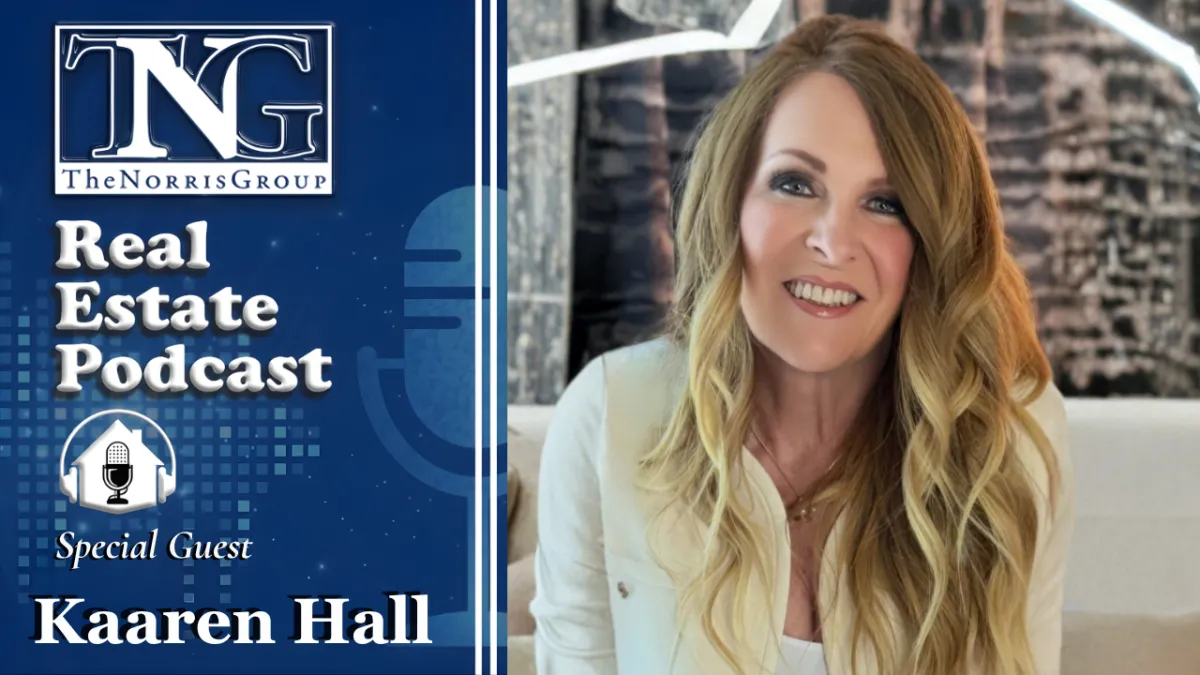
Self-Directed IRAs & Real Estate Investing with Kaaren Hall – Part 2 #970
In Part 2 of Joey Romero’s conversation with Karin Hall, founder and CEO of uDirect IRA Services and owner of OCRIA, they explore recent retirement account rule changes and how alternative investments are becoming more accessible to retirement savers. Karin explains the importance of understanding required minimum distributions, exploring different asset classes, and recognizing how employer-sponsored retirement plans may introduce investors to alternative assets. They also discuss how to evaluate investment opportunities, identify red flags, and conduct proper due diligence before committing retirement funds.
The conversation also looks at how investors can get started with a self-directed IRA, from identifying their current plan administrator and reviewing account statements to choosing investments and transferring funds. Karin emphasizes the importance of understanding prohibited transactions and the IRS rules governing retirement accounts. They also discuss why investors should focus on the underlying asset, assess their risk tolerance, and research credible sources before making investment decisions.
Beyond retirement investing, Karin shares the story behind OCRIA and its role in educating real estate investors through monthly meetings, expert panels, and networking opportunities. She explains how connecting with experienced investors can help people discover opportunities, exchange knowledge, and build valuable relationships. Karin also emphasizes the importance of contributing to retirement accounts and planning for the future, while highlighting a special benefit for The Norris Group subscribers: a waived $50 setup fee when opening a self-directed IRA through uDirect IRA Services.
In this episode:
How self-directed IRAs allow investments in real estate and alternative assets beyond the stock market.
Using retirement funds and non-recourse loans to invest in real estate.
Transferring existing 401(k) funds and IRAs into a self-directed account.
Understanding prohibited transactions, disqualified persons, and potential tax penalties.
How real estate syndications work and what investors should evaluate before committing funds.
Why due diligence, reviewing investment documents, and researching investment partners are essential.
Understanding UBIT, UDFI, Roth conversions, and IRA contribution rules.
Episode:
Narrator
Welcome to the Norris Group Real Estate Podcast, a show committed to bringing you insights from thought leaders shaping the real estate industry. In each episode, we'll dive into conversations with industry experts and local insiders, all aimed at helping you thrive in an ever-changing real estate market, continuing the legacy that Bruce Norris created, sharing valuable knowledge, and empowering you on your real estate journey. Whether you're a seasoned pro or a newcomer, this is your go-to source for insider tips, market trends, and success strategies.
Welcome to the Norris Group Real Estate Podcast. Today, we're continuing our conversation with Karin Hall, founder and CEO of UDirect IRA Services and the owner of OCRia. If you missed part one, be sure to give it a listen.
Let's pick up where we left off. Has there been any recent rule changes this year, or do you see some coming down the road that maybe people should be paying attention to? Right. I mean, we had some real rule changes in 2019, and then in 2022, I think it was, I think December, yeah, when we had Secure Act 1.0 and 2.0. And that was mostly changes to the RMD age.
It had been 70.5, today it's 73. RMD is required minimum distribution. So when you hit a certain age, you're required to take money out from a pre-tax account, not a Roth, but a pre-tax account.
So that did change a long time ago. So what's changed is kind of outside of those kind of rules. What's changed is, first off, we've got the Trump accounts.
So especially babies that are born this year and so forth can get a thousand dollars in their account. Looking at the time value of money, there's so much genius in that. Imagine you and I, Joey, we put a thousand dollars in our account as a baby and it grew and I don't know, maybe a bond or something, some mutual fund all these years, where we would be today.
We just let it sit there. So the time value of money is really important. So that's something, but it's not self-directable.
The Trump account is not self-directable today. The other thing would be the addition of alternative assets to employer plans. So when we heard about this, like, wow, are you kidding me? Wow, what's that going to be like? You know, we're not really sure.
But as an industry, and I am part of RETA, the Retirement Industry Trust Association, just saying it's our group for so many different self-directed IRA companies together. We were initially concerned, but what we realized is it would open people's eyes to alternatives. And so when they leave their company, they'll already be more familiar with alternative assets.
So what happens is it's not like your 401k will go buy a house like you do in a self-directed IRA. It's different. It's more like the way things work now.
Your 401k will be able to invest in what they call, get this, a sleeve of assets, a sleeve. I don't know where they got that, a sleeve of assets. It's like a mutual fund, a pool.
Apparently a lot of things can fit in a sleeve. OK, we're just going to go there. I don't know.
But it's called a sleeve of assets and they're alternative assets. So it's just like investing in a mutual fund, except inside this sleeve are alternatives. It's not an individual.
What kind of assets do you have up your sleeve? Right, exactly. That's what it means. That's what it means.
But it could be big hedge funds. It could be it could be things like what the Norse Group offers. You know, if you were made part of one of those acquisitions or part of that, those amalgamations of assets.
So you've got an investor education program on your site. OK, what are the red flags that people should be looking out when somebody tells you, hey, this this deal is perfect for your self-directed IRA? Huh. Well, OK.
You know, when people are raising capital, there's a $41 trillion pool of money for people to raise capital from. And people who have IRAs probably don't know they could self-direct. They probably don't even know.
So if that asset is, for example, like a reg D offering that the SEC approved or something like that, it could be perfect for a self-directed IRA. But is it perfect for you? And that's that's where you do diligence comes in. What asset classes do you know and understand to begin with? Do you understand how you're going to get paid back again? I repeat myself, but it's worth it.
Do you understand the underlying asset, that sort of thing? So it might be perfect for a self-directed IRA, but is it perfect for you? And the answer is acquired by doing your homework, you know, and it's not quick or easy unless you use SI, but that's also not perfect. Well, OK, so like here's the thing, I'm going to I'm going to be real here. So I think I think like we all think, oh, we could never be.
I was even thinking this driving, driving in this one. And all the years I've been doing this, I invested with with someone in our community. All right.
Thinking, you know, that person would never try to, you know, like like, you know, cross me. And but but that person did. And it wasn't just me.
It was a number of people who, you know, Joey, you know, from our community here and here in Southern California and for various reasons stopped paying all of his lenders, private lenders. An IRA can be a private lender. So long story short, I'll tell you, it was miraculous.
It's a little tell. We'll talk next time we see each other. Sure.
But I ended up this never happens. I ended up getting paid back in full. With extra proceeds.
Oh, wow. Because the underlying asset was real estate. Yes.
And it's sad enough years that it appreciated. So when that real estate was sold, there was enough to pay the attorneys and all the investors plus proceeds. Well, that's why a lot of investors that follow Bruce forever and Bruce himself, he's never been in the stock market.
You know, he's he's he's warming up. I think he's like finally going to start investing in the capital fund. But what they always and same thing with crypto, like I want to own something.
So you just want some. That's it. And so for Bruce, it's always like, you know what I could, you know, if I get in trouble, I could always sell it, you know, and I can make my money.
But, you know, he always talks about his story with the penny stocks where, you know, put in a hundred thousand, you know, within a short amount of time, he's up to like two hundred and forty thousand. And then he liquidated at like 50, you know, like crazy. Oh, right, right, right, right.
Yeah. Because he was such a genius investor. Yeah.
Yes. No, I mean, honestly, sometimes investing is a little bit like gambling. You just kind of take your chances and roll the dice.
But you can mitigate the risks. Am I right? Sure. Absolutely.
Yeah. All right. So so for somebody who has that sitting around, it's got that 401k, what are three things they could do this week to get to a self-directed IRA? Well, first off, number one, find out who your plan administrator is.
Maybe it's the principal group. Maybe it's, I don't know, Northwestern Mutual, Fidelity. Who is actually the custodian of those assets? OK, because you have the opportunity to move that money wherever you like to another custodian.
OK. So if you if you wish to do this, find that out. Understand how much is in there.
Get your statements. Make sure you have your statements and your ducks in a row and then make your decision. You know, what do you want to invest in? What is your risk tolerance for assets? Do you is a stock market within your risk tolerance? Or do you like assets that you can that you can touch and feel like real estate and precious metals, for example? Or maybe you maybe you're a note guy, maybe used to be in the mortgage industry and you really know notes and, you know, underwriting and you're really, really good at that.
So you're going to decide what your asset is and then you're going to make your decision. If it's a self-directed IRA, then that's what you do. Then you open a self-directed IRA account, give your old custodian the information, the mailing address, where to send the check and fill out some papers and you can get started self-directing it, self-directing itself, opening the account, funding it.
That's the easy part. It is so pain free. Right.
But what's the most challenging and where you should put your most focus when you are self-directing is what is the asset and what should I expect from it? What is the one myth around self-directed IRAs that you wish would just go away? Yeah, that you can use them for your own personal benefit or that you can use your self-directed IRA to give your son a loan to go to college like we've seen it, you know, and those are prohibited transactions. Again, prohibited transaction if you get caught. So and the only way you can get caught in a prohibited transaction is if the IRS taps you and said that it's prohibited because they've looked at it.
But you just want to steer clear of that. So it's doing things that would cause a prohibited transaction because we are not used to thinking of prohibited transactions. We're not raised with this idea.
It's, hey, this is my money. This is my retirement saving. It's mine and I'm going to invest the way I want, the way I would with my personal dollars, my private dollars.
But these are your tax protected dollars. And the IRS has something to say about what you do with those dollars. So just understand there are those two worlds, your private dollars, private personal and your retirement dollars with different rules.
All right. I want to I want to talk a little bit about Osiria. OK, so so give us you know, I know people have heard you tell a story here, but give us the short story of how you ended up running the club.
All right. The short version. I opened you direct in 2009 and in 20 like I don't 2011 got a call from National RIA.
Hey, we want you to open a RIA in Orange County. And I said, no, I'm just too busy. So, no, I kept saying no several times.
They said, well, just eventually just come to our event in what is it in Bellevue, Washington, which is beautiful. I love going there. OK, I'll go.
So I went to the national conference and at the end that the I'm sitting there, I have not agreed to open a RIA. And the president of National RIA is giving her closing statements and says, and we'd like to introduce you to the newest RIA chapter current hall, ladies and gentlemen. And I guess I'm doing it.
So I don't look back. I really I never regretted it for a minute. 2012, November 2012 is when we had our first meeting.
Probably Bruce was the speaker, you know, just breaking the doors down, people trying to get in. So great. And so we still hold our meetings sometimes live in person, sometimes on Zoom.
But we've had a meeting every month since 20, pretty much. I think maybe we took one month off, but since 2012. So tell us what a typical meeting looks like when they go to an OCRIA, both the virtual ones and in person.
Right. We come prepared to learn and come with questions because every time there'll be a different topic, we've done boutique hotels, we've done private lending of, you know, what else have we done? We just did ADUs and ADU panel. So fascinating.
We've done multifamily and to sit in here, a panel, for example, like these ADU people, specialists, these these people who do ADUs for a living, what it's like, the legislation that they're working with, the zoning restrictions, all of these different things. It's really an education. So if you want to emulate what they're doing, come here from the experts.
And that's what we provided every time. Every meeting is a different topic. So who's in the room? Is it mostly new people? Do you have a good mix? Like, you know, it's everybody.
And I'll say, well, how did you happen to hear about our meeting? Oh, they heard it on Meetup or something. But but, you know, the topic going in. So, you know that if it's something that you're interested in, you could come learn about it.
And it's perfect to have as a sister company to you direct IRA services, because everyone or every asset that we discuss is an asset that can go into a self-directed IRA. But it's an it's purely education. What do you personally get out of running the club? I get to throw a party once a month.
It's fun. I get to, you know, it's social and I'm in the office most of the time. And and when I'm it's a way to see it's a way to see people and meet them.
I must kind of get the idea that I'm an outgoing person. And one of those, what do you call it? A high I. And I really enjoy it. And that's where I get my energy from.
But it's also a good feeling to know that I'm helping educate people and helping them do better. That gives me a lot of satisfaction, you know, that I've really helped, you know, been the catalyst to help someone learn how to save for their retirement. It's no joke, man.
We're getting older. I mean, not you and me, Joey, but other people are getting older. And if you're getting older, well, gosh, save for that.
I mean, don't take it for granted. It may seem like it's a long way away. It's coming at you like a freight train, you know, just a big old freight train.
So I imagine I imagine part of what you get out of it is what I get out of going to all these meetings. You know, I started going to meetings with Aaron and then, you know, he he was the one who was like, hey, I got a lot going on. I need you to start driving my dad around.
And so I got to go to all these clubs for years and years. And, you know, I got the added benefit of listening to Bruce on the way there and then hearing him at the at the meetings, but then getting to meet so many people like because that's the one thing like about all these clubs that we that we recommend and endorse is that we only would speak at at clubs that were sort of vetted, TNG vetted, right? You know, ones that weren't there to, you know, try to remember the day Aaron told me, yeah, we ran an FBI scan on you. Like, OK, you know, it's so that that's the one thing that I love about, you know, going to your credit.
OCR is one of the only clubs that could still get Bruce back. Oh, I'm so glad. Yeah.
And we're so fortunate to have him here. Yeah. And so like that's that's my favorite part about running our events and about going to to the clubs is just seeing everybody, you know, from the new folks all the way.
And and the one thing and you could probably attest to this is people will help. Like if you just ask, people will help. Can you talk about that a little bit? It's the best.
I mean, don't you feel good when you've been able to give someone advice from your experience and it truly helps someone else and they take your advice, you know, and they implement and they come back and like, Joe, you said, do this. And I did. And now look, you know, this is a like a Gene Trowbridge, the attorney, Gene Trowbridge, says, Karen, you really should write a book like like 10, 11 years ago.
It's like, Gene, guess what I did? You know, he's like I wrote a book, Karen, you should really write a book. And, you know, it's it's very gratifying. So and again, from like you're talking about the clubs, friends we've had for more than a decade, right.
So for years and years, true, true friends that, you know, that I've traveled with and have, you know, if I'm like as like Jen Maldonado, I've gone to foreign countries with her, like going out, going to her birthday party and at Chichen Itza and just it's it's what do they call it? The third place, like you've got home, you've got work and then you need your third place. There's a name for that. And that's the real estate investor clubs for me.
All right. So what's the biggest difference between somebody who's at the club and actually doing deals and just somebody who's just collecting cards? Either way, they're benefiting, you know, either way, and just look for mutual benefit when you go to a club. Not only what can you receive, but what can you give? What do you have to offer and then offer that thing? And for for us that you direct when we for OCR, I mean, when we have our meetings and we meet in person, then we'll at the end of the meeting, go down to the bar and network for a while and sit around and talk and and talk about our deals.
And you can meet the speakers and and really and find out how they really do things and exchange numbers. And and you just learn all kinds of things about people and and and just about life in general. So it's a very satisfying thing to do.
You've done this for a little while now. So do you have a favorite story of investors meeting at OCR and becoming very successful or maybe a deal that was like one of those really killer? So many people. Wouldn't that be cool if we got like a commission on all the people we've introduced all the deals? I just popped in my head like Hunter Thompson.
Like now he is, you know, he's like huge. But but he started out up in L.A. He just started out and he would speak. He spoke at OCR and and now he's just he's just blown up.
He's moved to Scottsdale. He's got, you know, big groups and he charges, I think, 15 grand a year to be part of his mastermind. And he's just blown the heck up.
Yeah. And it's not because of me, but he's one of the people we had speak initially, see someone starting out from the beginning and where they are 12 years later. And there are a lot of people with that kind of drive who go to these groups.
This will probably air. Yeah, it's going to because you've got a meeting coming up on the eighth. Right.
Yes. So this will air afterwards. But you always get some really cool guests.
And you, Kathy, you I mean, I've known her for a long time. You've you've been good friends with her forever. But what are they going to be what is she going to be talking about this this meeting? Yeah.
So when Kathy Fetke is speaking at OCR, of course, she's talking about the economy and we've had interest rates jump. Oh, wait. Why did Trump want that Fed chair so that he would raise rates? No.
Right. So what happened and what's going to happen? We all want to know. And so anybody with any insight like Bruce, who I think is speaking for us in November because we chatted about that.
Oh, he did. Yeah. We'll have we'll have a talk and then we'll circle around.
But but we all we all want to know what's what's happening with the economy, because it's sort of the bellwether. Where should we go next? I mean, where should we point our sale as we head out? Are we going are we looking should we buy now because rates are going to be 10 percent? I mean, there's so many things we want to know how to plan for the future. And having some idea of what's happening with the economy is fine.
But it's an analogy of sailing is really good because you don't control the wind. You don't control the ocean. You just can point your sail.
Right. So what do members get out of being a member? And then can people come that aren't members? Yeah, we had a membership. But after covid, we met on Zoom for so long, we haven't reinstated the membership.
So a meeting is only twenty dollars. It doesn't even cover the cost of the room. Yeah.
When it's live and we won't have, you know. I know running events. I know.
Yeah, I survived. Real estate wasn't free, was it? No. So but this is our give back to the community.
It's you directs give back to the community. So so we don't have anybody. Anyone can go.
Just you have to have just come with an interest in real estate, come with an interest in learning and say, hey, you know, what do I have to contribute? When what do I have to contribute to the other people I talk to here? And lots and lots and lots of deals have happened as a result. One of the things that we always used to do, we used to do the financial tactics brunch right around this time. Yeah.
So people could, you know, plan, you know, the rest of the year and be prepared for the following year. Now, stay tuned. We're looking at bringing that back early, early next year.
But for investors that are looking to plan out the rest of this year, what advice would you give them? And what should they be focusing on? Twenty twenty seven. Right. I mean, the one thing about working in the self-directed IRA spaces, I'm not an advisor.
That's like, what are you? Not an advisor. That's what I am. So because we don't tell people what to invest in.
Right. So that's you know, and we don't have an advisor licenses, although I've had them in the past. OK.
So we're not advisory. But again, I'd say you just read and get your information from credible sources. And and like, for example, listen to Bruce Norris, listen to Kathy Fetke.
What are they investing in? The people who truly are investment advisors and find out what's their what's their path of progress. You know, what are they looking at? And again, you know, copy best practices. What is that Six Sigma? Remember that book about how to do well in business? And it's just find out what other people are doing.
Well, don't reinvent the wheel. Just do what they're doing and follow their patterns. And and you should lead you to success.
What's the biggest thing that you want people who are listening to this? If they only took away one thing from this whole episode, what would be the most important thing that you think they should take away? I think one thing that's very valuable to our listeners is make a contribution to your retirement account. OK, why? Because the first off, you might get a tax write off. OK, that could happen.
But the second thing is you are investing in your own future. So great. Make a contribution to your retirement account.
Talk to your tax person. Is it going to give you a tax break? But regardless, you're saving for your future self. It's it's maybe it's not money you don't have in your pocket today once you've contributed, but you're definitely going to need it in your pocket tomorrow and later on.
OK, from give me that same answer for the club. What to look for? I'm I would say again, set your sail about what kind of assets you like. What are you interested in? You know, what what what what has when you are scrolling at midnight through scrolling? Yeah, nobody does that except me.
I think doom scrolling. I mean, what catches your interest? What what assets are you looking at? Like all minor people building things, you know, and and build and with these big projects and seeing what they're doing is so interesting. So find the asset classes that that appeal to you the most and come to an OCR meeting and and learn about them or even say, hey, Karin, why don't you have a meeting about this? I'm really interested in this.
You know, hit me up and tell me what you'd like to learn. And we can schedule a meeting around that. All right.
So two last things. One, where can they find more information about OCRIA? Yeah, it's OCRIA.com, Orange County Real Estate Investors Association acronym OCRIA.com is our website for the real estate club and you direct reach out to us at info at the letter you you direct IRA.com. Well, there's there's something special that you'll do for our TNG investors. Right.
So that's right. Can you explain? So because that now people are going to hear this episode, they're going to be fired up to open up their self-directed IRA. So what what is the special incentive that TNG subscribers can can look forward to? Yeah, TNG subscribers will have their their $50 set up fee waived.
And we don't offer that to the general public. And but we do because of our special relationships. I mean, you know, we're not allowed to take any revenue from any deal.
That's another thing. But we can offer breaks to our special partners. Well, that's awesome.
So you heard it here. OK, go open up a self-directed IRA with you direct specifically. I can endorse.
Yes. Because, you know, Karin has always been a longtime friend. Believe me, Bruce.
Bruce wouldn't be speaking at her club if if that wasn't the case. And if Karin wasn't of the utmost integrity. So I highly recommend that you check out Oceania if you're anywhere near Orange County, if you're from San Diego, come on up.
I know there's tons of people from San Diego that that do both. They want to they go to the San Diego clubs. If you're in L.A., go to Oceania.
Yeah, we get a lot of people coming down from L.A. Jump on a bus. Come with your friend. Yes, absolutely.
So so check that out. We will link the that that that special offer in the show notes. So you can look forward to that to both sides.
Karin, thank you so much. You're always you're always so so gracious and and willing to help us out. And, you know, there's I think I told you early on, you know, Aaron.
Aaron had a special group of people and you're in that small group of people that Aaron always held really close and loved and loved him. And for me, that that group is the same for me. So thank you so much for always being there for us and always being so amenable.
Oh, thank you as well. It means a lot. All right, everybody.
Be sure to to check out you direct IRA and Oceania. And we'll see you next time. Thanks, Troy.
For more information on hard money loans, trustee investing and upcoming events with the Norris Group. Check out the Norris Group dot com for more information on passive investing through the DBL Capital Real Estate Investment Fund. Please visit DBL Capital dot com.
The Norris Group originates and services loans in California and Florida under the California DRE license zero one two one nine nine one one Florida mortgage lender license one five seven seven and NMLS license one six two three six six nine. For more information on hard money lending, go to the Norris Group dot com and click.