AI, Intellectual Property & Business Protection with Peter Nieves Part 1 #961
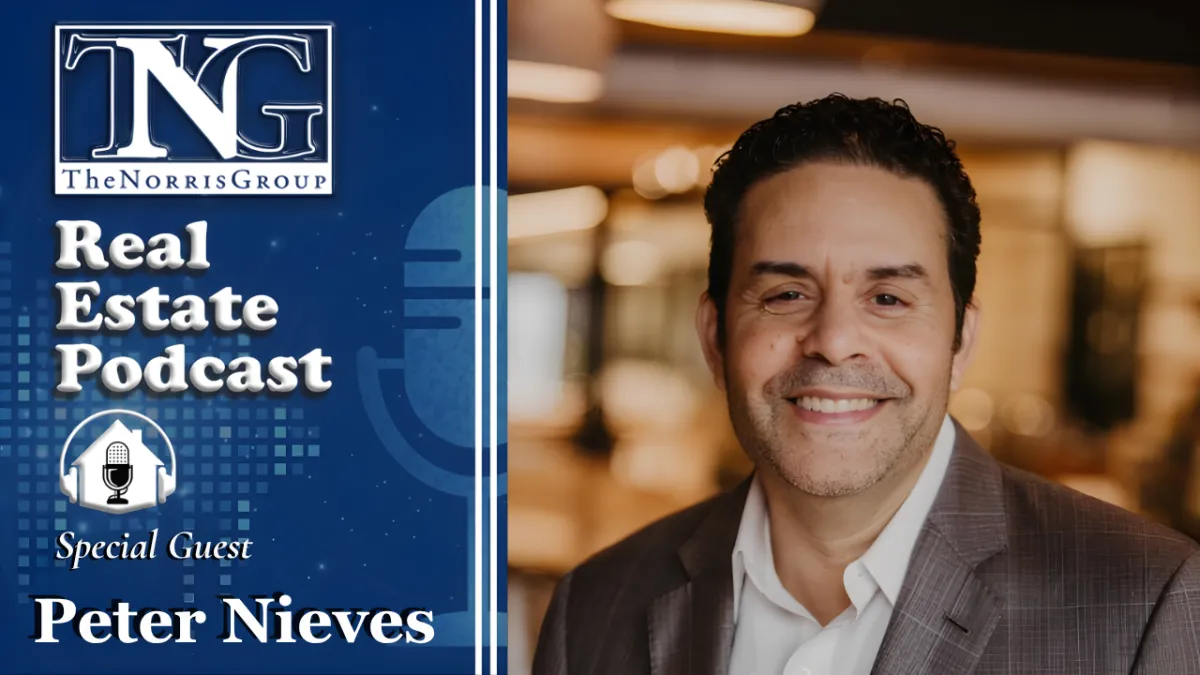
In this episode of The Norris Group Real Estate Podcast, Joey Romero is joined by Peter Nieves, Founder of Nieves Intellectual Property Law Group, for a discussion on artificial intelligence, intellectual property law, and the growing legal challenges facing businesses in the AI era. The conversation explores copyrights, trademarks, patents, trade secrets, and why entrepreneurs should understand intellectual property before launching a company, product, or brand.
Joey and Peter also examine the legal implications of AI-generated content, including websites, logos, books, images, and marketing materials. The episode covers copyright ownership, content scraping, deepfakes, trademark infringement, and the increasing number of lawsuits involving AI platforms and the unauthorized use of online content. Peter shares practical strategies businesses can use to protect their brands, content, and intellectual property while safely integrating AI into their operations.
Peter Nieves is a nationally recognized Intellectual Property Attorney, AI Legal Strategist, and speaker known as “The AI Legal Authority.” With decades of experience in trademarks, copyrights, patents, trade secrets, and global IP strategy, he advises businesses on protecting their intellectual property while leveraging AI for growth. Peter has been recognized as Lawyer of the Year in Intellectual Property Law, ranked by Chambers USA for Intellectual Property, named a Super Lawyer in IP Law, and is a former adjunct professor of Intellectual Property Law.
In this episode:
The four pillars of intellectual property: copyrights, trademarks, patents, and trade secrets.
Why entrepreneurs should address intellectual property issues before launching a business.
How AI-generated content impacts copyright ownership and legal protection.
The risks of using AI-generated logos, websites, books, images, and marketing materials.
Real-world examples of copyright and trademark infringement caused by AI tools.
Deepfakes, content scraping, and the growing legal concerns surrounding AI.
The rise of AI-related lawsuits and what they mean for business owners.
How AI policies, contracts, and business plans can help companies reduce legal risk.
Best practices for leveraging AI while protecting your brand, content, and business assets.
Episode
Narrator
Bill, welcome to the Norris Group Real Estate Podcast, a show committed to bringing you insights from thought leaders shaping the real estate industry. In each episode, we'll dive into conversations with industry experts and local insiders, all aimed at helping you thrive in an ever-changing real estate market, continuing the legacy that Bruce Norris created, sharing valuable knowledge and empowering you on your real estate journey. Whether you're a seasoned pro or a newcomer, this is your go-to source for insider tips, market trends, and success strategies.
Joey Romero
Welcome everyone to the Norris Group Real Estate Podcast. I'm Joey Romero, your host this week, and today we have a special guest, Peter Nieves. Peter Nieves is a recognized intellectual property attorney, AI legal strategist, and speaker known as the AI Legal Authority. He helps entrepreneurs, business owners, and companies protect the brands, content, and intellectual property, while safely leveraging artificial intelligence for growth. With decades of experience in trademarks, copyrights, patents, trade secrets, and global IP strategy, Peter has advised businesses ranging from startups to multimillion dollar enterprises. He has managed international IP portfolios, consulted on AI implementation and risk protection, and is widely recognized for making complex legal topics practical and actionable for business owners. Peter has been recognized as Lawyer of the Year in Intellectual Property Law, ranked by Chambers USA for intellectual property, and named Super Lawyer in IP Law. He's also a public speaker, educator, and former adjunct professor of IP law. Let's welcome Peter Nives. Welcome everybody to the Norris Group Real Estate Podcast. We have a very special guest today. He's not necessarily in AI, but I mean in real estate, but we're going to delve into how it's going to affect everybody that's an entrepreneur, and most of our clients are entrepreneurs in the real estate investment side, so there's going to be a lot of crossover here that we're going to talk about today, a lot of things that you're going to need to absolutely be thinking about here in the near future if you shouldn't be thinking about it already. So, let's welcome Peter Nieves to the podcast. Thank you for being with
Peter Nieves
us. Yeah, absolutely, Joy, happy to be here.
Joey Romero
Awesome, so I'm going to just dig into a little bit about your background. First, you have two degrees, you have a law degree and an electrical engineering degree. So, so you went to school to become an electrical engineer. How did that, how did you end up with the law?
Peter Nieves
I went to school for electrical engineering, but the issue was that I was getting bored. I mean, the way my brain works is I like to do new things all the time, like I need to be learning. I enjoy learning, and I enjoy getting heavily engaged in things. And so I started working as an engineer. I put myself through college, and I started working as an engineer in my third year of college, and by the time I got to my fourth year, I was getting bored, because they give you a project and you work on it for like three months, and I'm done within a week and a half, and they're saying make it better, and you make it better. It just was so boring to me. So I just, I said, I really don't enjoy doing this, and at the same time I was working two waiter jobs, because that's where you made the real money when you're in college, right? Way back in the day was as a waiter, because you made tips, and one of the waiters came up to me and said, 'You're driving me crazy, I'm getting pissed off with you because you look bored and you look miserable, and you're going to make more money than any of us as an electrical engineer. And I said, 'Yeah, but I don't think I'm going to like what I'm doing. And that's when he said, 'Have you ever heard of patent law? I had never heard of patent law. I was born in Brooklyn, you know, back when Williamsburg was not as nice as it is now. Never heard of patent law. Did some research, and I said that's what I want to do for the rest of my life. And so it was in like maybe two months of graduating that I actually applied to law school, and the rest was really, it was just a blessing. I ended up going to one of the best law schools in the world for patent law, which at the time was Frank and Prince Law Center, and the rest is history. I worked for Talisman, and I worked for another business, while also working two waiter jobs, so I worked three jobs while going through college full time.
Joey Romero
Did you find that that education actually helped you in your law learning the law and in your law degree?
Peter Nieves
Oh, absolutely. Yeah, you can't do patent law unless you have a science background, like you can't get - you can't become a member of the patent bar unless you have literally a science background, and so electrical engineering follows perfectly. And then electrical engineering covers so many different things. I mean, I did everything from quantum cryptography to microchip fabrication to pn junctions, I mean, you name it, software programming, everything. And so, when it came to technologies like AI, I already understood how neural networks were. I already understood all that stuff, not because of college, but because I continued learning, and I was filing patents for organizations like MIT, Georgetown, other ones like that. So I was very familiar with AI a long time ago. One
Joey Romero
of the things that I noticed, that from, from, you know, just researching your bio on things like that, you, you know, there's always the attorney-client relationship, right? But you actually flip it. You actually wanted to say client-attorney relationship. And can you talk about a little bit why that's so important to you?
Peter Nieves
Yeah, it's a good point. So, I was the head of the IP department and the patent law department in a big New England law firm for 17 years, like, I helped to build the Panama department. I was rated as one of the best lawyers in the nation. I was very, very blessed, like, very blessed. And about three and a half years ago, I felt this very strong colleagues time to leave. Like, it's something that you usually don't do, right? Usually, when you're like being paid that kind of money, you have so many people working underneath you, that's when you just kind of sit back and get ready for retirement. And I just had this God calling, it's time to start your own firm and do it differently. And so my focus is really educating the people that I work with, understand, helping them understand that lawyers are not supposed to be subject to them. They're providing a service, like when you go to a mechanic, you don't say, "Hey, fix everything in my car. You try to figure out what's going on, and then you have that thing fixed. But when people work with lawyers, it's they go to them and they feel like they're being held ransom because they don't understand what's going on, they don't understand the pricing, they don't understand the billable hour, they don't understand what legal analysis is being done. So, what I decided to do is build an educational institution plus a law firm. So, my educational institution trains the public on the legal principles that are vital to being successful as a business owner, and at the same time, my law firm actually provides legal services, should they wish to, you know, engage with our firm, but our firm just acts very differently, like we do a lot of flat fees, there's no mysterious cost, there's no, oh my gosh, I just got another bill, none of that, like we make sure they understand what we're doing at the same time.
Joey Romero
Well, and that's one of the last things that we're going to lose as AI takes over more and more of our lives, right, is our purpose and our curiosity, and what makes us essentially human, and one of the things that the new jobs are going to be created are going to be managing interactions human to human.
Peter Nieves
Yeah, very much so. I mean, and I think that's something that's being lost in the utilization of AI right now. A lot of people that are using generative AI are just using it to complete a task, but they're not training the models, they're not providing their own intellect, they're not being careful about making sure that what they're uploading is not being provided to third parties, like they're just lost, they're just using it like Microsoft Word, they have no idea what they're doing, and they're being taught by a lot of people in the public, and they still, even those people, don't understand what they're doing, so it's kind of ironic to watch. It's, it's just going to make people like me busier, honestly. Because I give you an example, last week I had a major client call me up and said their entire website was carbon copied, clearly the URL was uploaded into an AI platform, every image, all text, everything exactly the same. They reran the exact same thing and started taking a ton of sales from my client. Right, so the question is, well, what do you do in situations like that? I knew AI was utilized, I shut them down within 24 hours. Now I'm going after them for copyright infringement, trademark infringement, patent law infringement, all because they carbon copied a website. Well, guess what? There's a multi millionaire who is a very big social media presence guy, and he's been telling people, take the take the URL of a website that you like, copy it, paste it into this specific AI platform, and you'll get a copy of the website, so that guy is teaching millions of people how to basically commit infringement, which is making people like me go after them for hundreds of 1000s of dollars, so it's, it's just very messy, so
Joey Romero
yeah, so let, yeah, we're gonna get into all of that, and why, why people should be, you know, really focusing on it as, as an entrepreneur and as a creator. But let's break it down. What, what actually is intellectual property?
Peter Nieves
Yeah, so intellectual property is a, it's a means of protection provided by the government in multiple different disciplines. There are what call what are called copyrights, there are trademarks, there are patents, there are trade secrets. So, there's the different branches of intellectual property for protecting different things. So, if
Joey Romero
you call those the four pillars, right?
Peter Nieves
What was that?
Joey Romero
The four pillars of
Peter Nieves
essentially, right? So, if you're trying to protect a creative work, the embodiment of a creative work, we're still. There's some element of creativity. It's fixed, and it's created by a human being. That's copyright law. So, that's like your websites, your funnels, your books, your videos, your audio, your TikToks, Facebook, your online courses - all those things fall under copyright law. If you're trying to stop others from making, using, selling, or importing your systems, your methods, your apparatus, your devices, that's patent law, right? And now, if you're trying to protect a designation of a source of goods or services that falls under what's called trademarks, so you have word marks like Nike, you have slogans like just do it, and you have what are called design marks, like the Nike swoosh, which everybody knows what it is now, right, but that that basically serves as an identification of a source of goods. Then there's things called trade secrets. Trade secrets are extremely difficult to enforce because there's a lot of regulation based on specific states, so you have to do so many things to make sure nobody sees it. It kind of reminds me of when you know they go to Double Oh Seven and say, hey, I've got this assignment for you, you know. And so, like, when you open this thing up, it's gonna blow up unless you throw this thing away, right? And, and should you, you know, if you disclose to anybody, we're gonna have to kill you. Like, that's what you think of when you think of trade secrets. It's not on a local area network, it's on an isolated computer. Only the people that need to look at it can see it. Those are the things that are involved with trade secrets. So, each of these different branches of protection is available to the public, and each one has a different cost. Trade secrets are free, copyrights are like $65 per international class, patents are more expensive. Trademarks are like $350 per international class, but copyrights are $65 just as a flat fee, not per international class. So, the whole point being that the government provides a way for you to protect yourself. Unfortunately, people don't understand them, so they end up getting things stolen.
Joey Romero
Is that the number one mistake that entrepreneurs and business owners make.
Peter Nieves
No, I wouldn't say that's the number one. I'd say it's up there, you know. It's for companies to become highly successful, they need to understand what assets they own, and they need to be able to control the assets. If they don't understand what they potentially own, then other people will steal it, corrupt it, modify it, guide people to their sites or to their products or services by utilizing what you have invested tremendous amounts of time and effort into, and so you need to understand how intellectual property works. It's kind of like when you build a company, you have furniture, right? You have computers, you have furniture. Those are tangible assets. Intellectual property is what's called an intangible asset. So you need to understand, like, my website is protectable, my name is protectable, my logo is protectable, my, my device that we just created as a company is protectable, my software is protectable on the copyright for the code, and the functionality is protectable under patent law. Like, if you understand these things, then when you build up your business, it becomes highly successful, because other people can't do what you're doing without your permission, and when you do that, you have a limited monopoly, which makes you more money,
Joey Romero
like we see it in these lawsuits in Hollywood, like, so somebody's look and somebody's voice actually intellectual property too.
Peter Nieves
Well, I mean, now you're talking about something that's a little bit different. So the way somebody sounds is not in and of itself protectable, right? The way somebody looks, if you're out in the public, somebody could take a picture of you, and do whatever they want with it. Right now, they can't misrepresent you. They can't put you in situations that could potentially harm you. That's actionable. The other thing is, they can't create what's called a deep fake. Like, a deep fake essentially is taking my picture. Let's say they see my picture online, they copy my picture, and they upload it into an AI platform, and then they have me teaching something, because they go, "Well, this guy is pretty known for xyz. If we get him talking about our product or him talking about our service, then we'll get more people, right? That that's a combination of deets, fakes, and misrepresentation, which is it is actionable because the original image was copied, and since the original image was copied, that's copyright infringement. Now, if you're walking out in the public and somebody takes a picture of you, there's nothing you can do about that, but if they put you into some kind of pornographic situation that's misrepresenting you and harming you, that is actionable. So, it depends on the circumstances associated with the use of your image or the use of your voice.
Joey Romero
Okay, so when is the right time for an entrepreneur to start thinking about IP? Is it before they launch their business or right after?
Peter Nieves
I think, honestly, I think you should be thinking about intellectual property even before you start launching. Show you company. I'll give you an example why people file for their name with the Secretary of State, right, their business name. So, let's say it's ABC Corporation, they'll go on to the Secretary of State's website, they'll do a corporate name search, they'll see ABC Corporation is not taken, so then they will go and they'll file an LLC in the name of ABC Corporation. What they never did was they never did a federal trademark search, since they didn't do a federal trademark search. If ABC Corporation actually is a federally registered trademark of another party, Jay just walked into a lawsuit. So, even at the point of going forward with forming a company, it's important to understand what intellectual property is, and at least the name of your company. Make sure that your name that you're using for your company is safe to use. Same with your products, same with your services. Those names should be safe to use. I can't tell you how many times I have to deal with cease and desist letters on behalf of clients because other people are using their names without even doing a basic search on the United States Patent Trademark Office, like they just, they're clueless, and then someone spends like 600 bucks an hour on somebody like me to shut them down, so it's, it's important to actually know about intellectual property law even before you start building your company.
Joey Romero
So we already touched on a little bit, but as creators and people start using AI, so let's say I use Chat GPT Mid Journey, something like that in my business, some sort of AI tool. So, who actually owns what I just produced? Is it me or is it Open AI, or who owns
Peter Nieves
it, right? So, when it comes to copyright law, if you're looking at owning something under the terminology of copyright law, so that means I can stop others from making copies of it, modifying, displaying it. If I want to be able to do that, the owner is not AI, and the owner is not the person who's using AI. If AI is doing what's called creating, all right, the federal district court have said this, the copyright office have said this, my book, which is coming out within 30 days, has said this like this is a big deal. This is where a lot of people are spending a lot of time and money promoting something, creating something, and then they go out there and they sell it, and they don't even own it. As an example, there are many different companies right now and individuals that are promoting the writing of books using AI. Every single one of those books are not owned by the original creators, right? Because they're not the creators. AI was the creator. Now OpenAI doesn't have any legal rights to it. The one who actually asked Open AI's ChatGPT to write the thing, or clod, or whatever it is, to write it, they don't own it, because it was created by a machine, and the Copyright Office and Federal District Court have both said if something's created by a machine under copyright law, you can't own it. But there's a way around the system, is a very unique way around the system that most people are not aware of. You can do what's called enhancement versus creation, so if you're really good at what you do, you can take your content and you can enhance it using AI, in which case you're not actually creating it, thereby bypassing this whole issue of not being able to own what is essentially rendered by AI, because it's not created by AI. So, there, if you get good at what you're doing, there's a way through the system.
Joey Romero
So, help me understand, can cancel, so if I create something, how do I protect what I generate with AI and still making money?
Peter Nieves
I'll give you an example. Let's say that I took my own image and I used AI to change the background. The modification of the background is not really considered to be a new creation, it's considered to be a modification or enhancement. Therefore, the work is owned by me under copyright law, right? If I take a written work and I upload it into Grammarly, and I use Grammarly to change the context of it, or to change it from past tense to present tense, Grammarly is not creating, it's enhancing, and because it's doing that, it's not considered to be the creator, therefore I own the copyright, and I can still file a copyright [email protected] right now. If you file a copyright application, which again only costs like 65 bucks, if you go to copyright.gov when you go to fill out the form, it has a question that says was AI used in the creating of this blah blah blah, and you need to tell them, and if you lie, guess what, it's a federal offense, because this is a federal thing, you don't want to be lying, that's not a good idea, let's stay out of jail, not a good idea, so anybody who is, if you're thinking of using generative AI in the creation of everything, the way I tell people to use it is to use it for getting ideas right, because ideas are not protectable in and of themselves, it's the embodiment of the idea. So, let's say you have a book, and in the book there's a little boy, he goes in his backyard, he gets lost, there's some kind of owl hooting, he goes towards without hooting, and then he runs into a. Like, let's say a group of deer, a deer take them on a voyage, right? And so, and when he returns, it's like time was never lost. Let's say that's the story, but you're saying, man, you know this is really pleasant. I need some kind of hook, I need something dangerous. So, hey, I'm going to upload my book, and I'll talk to you about whether you should do that. By the way, because unfortunately, a lot of times what you upload will go to the public, so we have to make sure that doesn't happen. But let's say you uploaded what you have, and you say, "Hey, ChatGPT, I want you to create a character that puts a dangerous edge to this, where the boy and the deer like run into some kind of creature that's scary and somehow they overcome it, and then the boy gets back home, right? And now ChatGPT just creates that thing, right? And you get the idea of, oh my gosh, there's a snake, right, or there's a wolf. So now you take the idea of a snake or a wolf, and you write something, because you got the idea from the platform now, if you have it right, it for you. When you file the copyright for the book, you need to disclaim that that entire chapter that's associated with that dangerous character was written by AI. And then your registration is going to specifically say that you own everything except that part that was created by AI, right. This was the situation with Christina Krastinova. She wrote some book, it was a comic book way back in the day. All the text was written by her, but the images she created using AI. And so the copyright office said, 'Look, we're going to give you a registration for the words, but you can't own the images. And so she owns the comic book words, she doesn't own the images, so you may end up with a book created by AI, where partially created by AI, where you, you own part of the book, you don't own other parts, or you can use AI the way I'm saying, which is to get ideas and then write it yourself, which case you own
Joey Romero
it all, interesting, it's it's such a, just a brand new world that's, that's coming to us, and everything's coming at the same time, you know, because, because obviously, you, you said you were, you've been working on, on the infrastructure of AI for a long time, and you understood it, but nobody really, nobody really understood it until like the last couple years, and it's hitting everybody now. So, one of the things that AI is making it easier for people to do is to bring litigation to everybody. So, how does what does that mean for business owners if it's just that much easier to sue you?
Peter Nieves
Yeah, so this is something that there was a certain individual, an expert out at MIT, who actually spoke about this recently, and said it's that they're concerned it's going to clog the courts, right? But here's the thing, I've been a litigator for 28 years, so here's the reality of it: following a claim does not mean you can maintain a claim, all right? So, just, just by the mere fact that you go, can go on to Open AI's ChatGPT, or whatever, I'm mentioning Chad GBT, because most people in the world know what that
Narrator
is. Sure,
Peter Nieves
if I start talking about other ones, people are going to go, "What next?
Joey Romero
It's the same as Claude, same as Gemini,
Peter Nieves
exactly right. They're gonna, what's this, what's that? So we're gonna keep it simple, right?
Narrator
Sure.
Peter Nieves
So let's say you say, "Hey, I want to file a claim against ABC Corporation for blah blah blah, please draft me a complaint, and boom, it's done. Yeah, you can pay the small fee, and you can file it, but guess what? You are now in the legal system, which means it does not begin and end with the filing of a complaint. That is only the beginning, and there's a lot that will happen, a tremendous amount that will happen. So, you're going to have to go through hearings, preliminary hearings, you're going to have to go through requests for production, interrogatories, expert witnesses. It's, it's a mess, and it's going to cost you a ridiculous amount of money. So, the mere fact that people have realized, oh, I can file a complaint, I'm not too concerned about it, honestly, because it's, you're going to have a lot of cases that are just going to get dismissed very fast, like it'll slow things down in the beginning, but you're going to have a lot of really smart lawyers filing what are called immediate, like requests to dismiss the case, so it's going to be a motion to dismiss right off the bat, because XYZ wasn't done properly, or this wasn't pled properly, or blah blah blah, and cases are going to get dropped left and right, and if that doesn't happen, then what's going to happen is a lot of these people that are bringing these complaints because they're thinking this is so simple to do, they're going to spend way more money than they ever dreamed when the other party files what's called a counterclaim to them, and they can't get out of the case, so the mere fact that somebody can create a document and file it, that's not that big of a deal. Honestly, people could have gone online and looked up a complaint before. Now it's easier to create a complaint, yeah, but once you step in the ring, it's kind of like, hey. Anybody here can join an MMA, you know, battle, but when you get in that ring, somebody's going to get hurt, and I can guarantee you it's not going to be the party who's prepared, and it's likely the one who actually used Chad GBT to draft a complaint is probably going to get their butt knocked out within 20 seconds of the bell ringing, so
Joey Romero
well, that's that's a lot of the demystifying of what's coming with AI, right? Because it's always, oh, it's this, oh, all these jobs are gone, oh, but there's just nuances and subtleties that are going to either extend the timeline or not even make it come true at all. So, what's the one thing that maybe business owners should be putting in their contracts to protect themselves when it comes to these types of things.
Peter Nieves
Well, I think a lot of companies don't have what are called AI business plans, like they don't - they're not even familiar with what they are, and that's really unfortunate. Because right now, I mean, as of today, there's over 8590 lawsuits that have been filed, AI focused lawsuits that have been filed in the United States alone, like that's a lot of lawsuits in any trend that that is a huge trend.
Joey Romero
Does that include the Elon versus Sam? I'm just
Peter Nieves
kidding. Yeah, well, that mean that even includes like the lawsuit that was there, was a file, a lawsuit that was filed a few weeks ago against Meta and Zuckerberg. There's been
Joey Romero
anthropic got sued for all the books that they learned on, yeah,
Peter Nieves
yeah. And this is the big issue, right? The big issue is that a lot of these AI platforms initially were trained using scraped content when scraped content is public material, so that means your websites, your funnels, like your Facebook, your YouTube, your TikTok, your Instagram, like all your stuff was scraped without your permission, and if you had books online or online courses, that was scraped too. Why? Because I'd say, of all the people listening to this podcast, I would say 97% of you don't know how to stop your site from getting scraped. 97% I would be shocked if two people watching this podcast actually know how to prevent their website from being scraped. So that's the issue. The issue is that all the content got scraped, it was then utilized it was going, it went through a neural network, weights and patterns were determined, and the result is that you have a basically a database that's being utilized to render results after prompts provided, where the results are derivatives of what was originally put in, including copyrighted works of others, that's why the New York Times filed lawsuits. That's why, like you mentioned, Joey, you know, all these publishers filed lawsuits. These big publishing companies filed lawsuits, and I'm not talking millions, I'm talking billions.
Joey Romero
Yeah, they settled 50 billions.
Peter Nieves
Yeah, like, yeah, I mean, this, this is not a joke. I mean, for people to kind of think, oh, this is not a big deal, you know, it's, it's going to impact everybody, because think of it this way, if I have a business and I use Mid Journey as an example, and I know that the images that are rendered by Mid Journey were influenced by the database that was trained, the AI model was trained using scraped content, that means the images of third parties, that means the render result that I get may in fact commit copyright infringement, or may in fact commit trademark infringement. Now I use that as the cover of my magazine, or I use that in a marketing campaign. What can happen? I could get sued, I could get sued for using somebody else's content without their permission,
Joey Romero
because the model got trained on it.
Peter Nieves
Yeah, and all of this stuff is happening right now, and nobody's hearing about it now. There's, there are ways, just to be clear, like I am not anti AI, because I use AI literally every day within my law firm, within my educational institution, but when I use it, I use it the right way. So, what I do is I use AI models that are trained using open source and licensed content only, like Adobe Firefly, like Bria, like there's tons of them now. I use those kind of sites, so now when the results come out, I'm not going to get in trouble for using the results, because if I got sued by the company that actually I'm paying to get the results from, that'd be a really bad business plan for the guy who created the company, right. So I'm using results that are safe to use by using AI platforms that are safe to use, but if you just cut corners because you don't understand how AI works, you're becoming very vulnerable very fast,
Joey Romero
so how do you advise your clients to navigate, you know, agreements when the landscape is still unknown being written? So how do you, how do you tell your clients to figure this out?
Peter Nieves
Yeah, so the main issue is that the when people became very familiar with. Generative AI, which is only since what was it, November 2022 that Chat GPT actually came out. Right now, again, keep in mind AI has been around for a very long time. I was writing patents on AI 60 years ago, right? This is not new stuff, guys. Yeah, it's just mainstream, right. Okay, so the issues that need to be addressed, they're all privacy, copyright, trademark, those are the main issues, copyright policy issues, privacy issues, trademark issues, those are like the biggest issues. Okay, those issues are consistent, that they have not changed. All that we're doing now in our legal agreements, is we're making sure that if you're hiring, as an example, if you hire a third party to work for you to do a certain project, I have AI provisions that are inside the independent contractor agreement. It specifically says if you're going to use AI in any way, shape, or form in performing the task that you've been hired to do, you need to get permission from me in writing beforehand. Why? Because I need to know that you're using a platform that's safe to use. You're going to get results that are safe for me to use, and if I'm having you create something that I want to own under copyright law or some other body of law, I need to know that after I pay you $5,500 to do this project. I can actually own it if you created it using AI. I can't even own it. So, I mean, think about this: somebody goes on Fiverr and they say, 'Hey, I need a logo created. Here's $2,500 Give me a good logo. They get the logo and they find out that this guy was using Mid Journey to create a logo, or even worse, they went to a site like Logo ai.com and they created a logo. Do you know that I've actually done live demonstrations on sites like Logo AI, created a logo, and then done a search for that logo, and find out it's a federally registered trademark of another party. But so now you're paying for a lawsuit. I mean, it's not bad enough that you're like, you know, you're getting that's making you're vulnerable, you paid for it, like, is this doesn't get any worse. So,
Narrator
well,
Peter Nieves
so, so, I mean, to answer your question, for the legal agreements, what I'm doing is I'm making sure there's terms and conditions that talk about if you're going to use AI in any way, shape, or form, you need permission in writing, what you're allowed to do, what you're not allowed to do, and for businesses that I represent, I give all I make sure they all have internally they have an AI business plan that lays out what's AI, what can you do with it, what can you not do with it, what's the procedure, if you find out that someone's using it within the company, what you need to do. Who's the contact point, like all those things are laid out in an AI business plan.
Joey Romero
Well, it's a new world that a lot of people would intend to include in, you know, my systems or my plan, everything. Yeah. Okay, everybody, that's going to do it for part one of our interview with Peter Nieves. Please join us next week, part two. See you then. Real estate industry is changing faster than ever, and the investors who learn AI today will have a massive advantage tomorrow. That's why the Norris Group and White Feather AI created Tsunami, the Real Estate AI Summit, June 13, in Ontario, California. This isn't another generic AI seminar. You'll get live demos, real deal analysis, and practical AI workflows you can use in your business, investors, realtors, and operators, this one is built for you. Tickets are 595 but use the code Twonami, that's T W O N A M I, to get $200 off. Grab your spot at The Norris group.com Hope to see you there.
Narrator
For more information on hard money loans, trust deed investing, and upcoming events with the Norris Group. Check out the Norris group.com for more information on passive investing through the DBL Capital Real Estate Investment Fund. Please visit DBL capital.com
Joey Romero
The Norris Group originates and services loans in California and Florida under the California DRE license 01219911 1219911 Florida mortgage lender license 1577 and NMLS license 1623669 For more information on hard money lending, go to the Norris group.com and click the hard money tab.